Your “About Us” page is one of the most visited and most influential pages on your website, second only to the homepage. Visitors go there to assess credibility, not curiosity. Yet most organisations waste the opportunity with generic copy and stock photos.
For most organisations, this page is a graveyard of corporate jargon, generic stock photos, and timelines that no one, not even your own team, has ever read.
It’s a missed opportunity of staggering proportions. Why? Because your ‘About Us’ page isn’t for you. It’s for your customer. And it’s the second most-visited page on a corporate website, right after the homepage.
When a high-value client or a top-tier job candidate lands on this page, they are asking one simple, human question: “Can I trust these people?”
A paragraph of text cannot build trust. A stock photo of people in a boardroom cannot build connection. But a story can.
This guide is for founders, CEOs, and decision-makers who understand that in 2025, the most valuable asset you own is your story. I’m going to give you the complete, value-first blueprint for transforming your most boring webpage into your most powerful strategic asset.
Let’s start with a hard-hitting number. In the UK, a single bad mid-manager hire (earning £42,000) can cost your business over £132,000 in recruitment fees, lost productivity, and retraining…
Now, you may ask yourself: what role did your ‘About Us’ page play in this?
When a potential hire, that perfect A-Player you want to steal from your competitor, is deciding between you and them, they do two things. They look at the job, and then they look at your ‘About Us’ page to find out who you are.
If your page is a wall of text about “synergistic-driven-solutions,” you haven’t just failed to impress them; you’ve actively repelled them. You’ve signalled that you are a generic, faceless entity. Top talent doesn’t want to work for a “synergy.” They want to join a mission.
The same is true for your clients. In the B2B world, especially for high-value services in places like Edinburgh or Glasgow, the sales cycle is long and built on relationships. Your clients aren’t choosing the cheapest option; they are choosing the partner they trust the most. Research shows that 55% of people are more likely to buy from a brand after connecting with their brand story.
Your ‘About Us’ page is your first, and often only, chance to build that trust at scale. Wasting it isn’t just a marketing error; it’s a fundamental business-development failure.
When I say “documentary,” I’m not talking about a 90-minute epic. I’m talking about a 2-4 minute cinematic, story-driven film that replaces the boring text on your ‘About Us’ page.
This is not a glossy advertisement. It’s the opposite of an ad.
An advertisement tells people you’re the best.
A brand documentary shows people why you do what you do, and lets them feel it for themselves.
Think about the corporate videos you’ve seen and hated. They are almost always a montage of cheesy stock footage (like wind turbines or people high-fiving) set to a bland voiceover reading corporate jargon. This is what we call a “corporate video,” and it fails because it lacks a story and, crucially, it lacks conflict.
A short documentary, on the other hand, is built on three classic storytelling pillars:
Character: Your founder, your team. Real people.
Conflict: The problem you were obsessed with solving.
Resolution: Your mission. The “why” that gets your team out of bed in the morning.
This is what builds an emotional connection. And in business, emotion is what drives the decision, which logic then justifies.
Every founder I’ve ever worked with, from tech CEOs in Scotland to global brand leaders, has said the same thing to me: “We don’t really have a story.” They are always wrong.
Your story isn’t a timeline of when you opened which office. Your story is your struggle. It’s your values in action. Here is the exact framework I use, the “Filmmaker’s 3-Act Structure”, to find the “golden thread” of any organisation’s story.
Grab a pen. This is your blueprint.

This is your origin. Every company was started to solve a problem. This is your “villain.”
The World Before You: What was the frustrating “status quo” in your industry before you existed? What was broken?
The Tipping Point: What was the specific moment you, the founder, said, “Enough”? What was the personal, frustrating experience that made you decide to build something better?
The Mission: What is your core, guiding principle? Not “excellence” or “integrity”—those are just words. Be specific. Is it “relentless simplicity”? Is it “human-first tech”?
Example: A financial services firm in Edinburgh wasn’t started to “manage assets.” It was started because the founder’s parents were confused and intimidated by traditional advisors who used complex jargon. Their mission wasn’t “wealth management”; it was “financial clarity.” That’s a story.
This is the messy middle. This is where you prove your “why” from Act I. It’s not about what you do; it’s about how you do it differently.
The Conflict: What is the hard part of your job that you refuse to compromise on? Where do you spend the extra time or money that your competitors won’t?
The Process: What is your unique way of working? Show your team debating at a whiteboard, crafting a product, or talking with a client. Show the craftsmanship.
The Values in Action: Don’t just say you’re “collaborative.” Show me a real, unscripted moment of your team solving a problem together. Show, don’t tell,.
Example: A software company’s “how” is their obsessive, 3-day onboarding workshop. It’s expensive and time-consuming, but it’s their non-negotiable secret to client success. That “struggle” (resisting the urge to do it faster/cheaper) is the story.
This is your vision for the future. It’s the resolution.
The Client’s “After”: What does a better world look like for your clients now that you exist? How do they feel?
The Team’s “Why”: Why does your team really work here? Ask them (unscripted) what they are most proud of.
The Vision: What is the future you are building? This is your rallying cry for new clients and new talent.
Example: The financial firm’s “impact” isn’t a graph of returns. It’s a shot of a client feeling confident and calm about their future. It’s about a feeling, not a number.
As a founder, you may love the idea of a story. But your board and your CFO need a business case. A brand documentary is not an art project; it is a high-performance commercial asset with a clear, measurable ROI.
Here are the three ways a brand documentary provides a massive, tangible return.
1. It Wins the War for Talent (and Slashes Hiring Costs) As we’ve established, a bad hire is a six-figure mistake. In the 2025 talent market, you are not just competing on salary; you are competing on purpose,.
The Data: Companies with strong employer brands get 50% more qualified applicants,,. This isn’t just more applicants; it’s better ones.
The Data: A strong employer brand can reduce your cost-per-hire by up to 50% and increase retention rates by 28%,,.
The Strategy: Your brand documentary is your #1 recruitment asset,. It’s the first thing you send to a promising candidate. It does the hard work of selling your vision and culture before you’ve even paid for an interview. It’s the ultimate talent filter.
2. It Shortens the B2B Sales Cycle In B2B, the sales process is long because it’s built on trust,,. How many “introductory” meetings do your sales team sit through, just trying to explain who you are and why you’re different?
The Strategy: A brand documentary automates this. By sending this film to a prospect before the first call, you completely change the dynamic.
The Old Way: The call is a 30-minute pitch. “Here’s who we are…”
The New Way: The call is a 30-minute collaboration. “You’ve seen our story. You know why we do this. Now, let’s talk about your problem.” You have skipped three rungs of the trust-building ladder. This is how a video directly translates into a shorter sales cycle and higher conversion rates.
3. It Defends Your Premium Price If your ‘About Us’ page is a list of services (like your competitor’s), you are inviting a price comparison. You’ve made yourself a commodity.
The Strategy: A story creates an emotional monopoly.
When a client sees your founder’s struggle, understands your team’s obsessive craftsmanship, and connects with your mission, you are no longer “one of the options.” You are the only choice.
You are no longer “the corporate video company in Edinburgh”. You are the only company that has that specific story and those specific values. This is how you stop competing on price and start winning on brand,.
To demystify this, here is a transparent look at how a professional, cinematic brand documentary is created.
This isn’t just “hiring a videographer.” It’s a strategic partnership.
Step 1: The Discovery & Strategy Workshop This is the most important part. It’s not a “briefing.” It’s a 2-hour strategic session where we dig for the “golden thread” using the 3-Act Structure. We don’t talk about cameras. We talk about your business, your frustrations, and your mission.
Step 2: The Cinematic Approach (Production) This is what separates a professional from an amateur. It’s not just about a high-end camera.
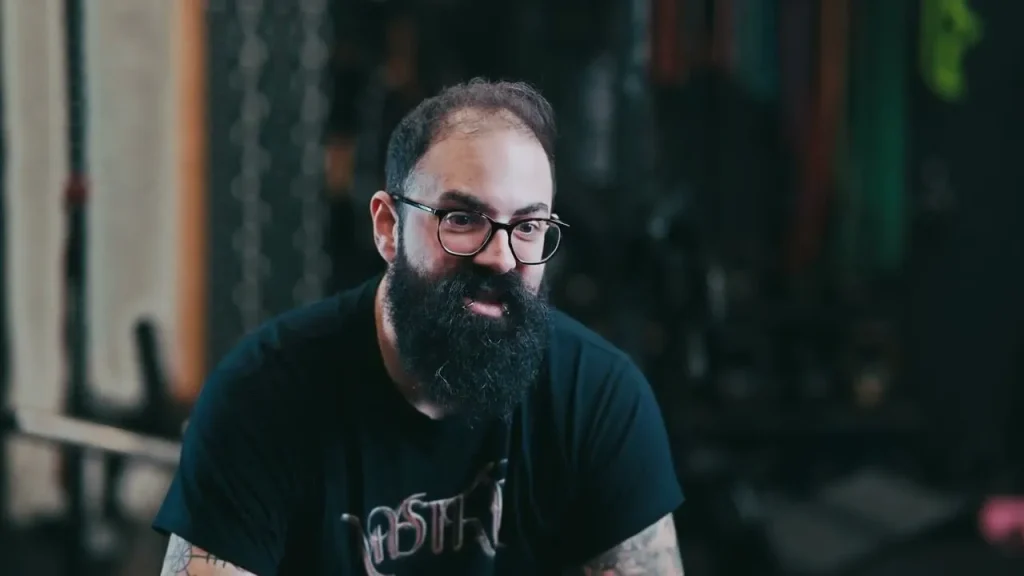
The Art of the Interview: My job as a director is not to make you “perform.” It’s to make you comfortable. The best interviews are conversations, not interrogations. An authentic, passionate answer (even with an “um” or an “ah”) is 1000x more powerful than a perfectly memorised, robotic script.
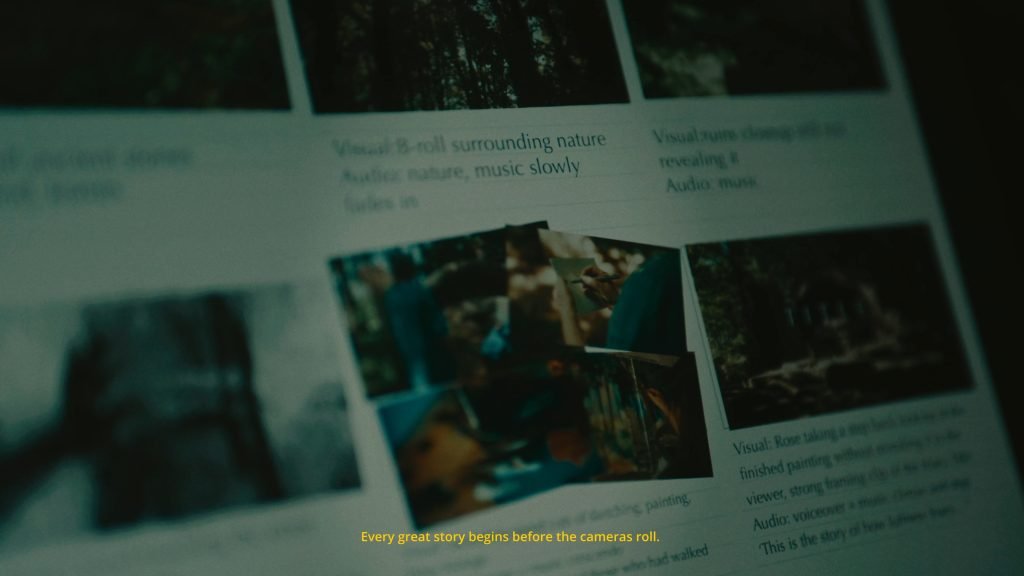
Cinematic B-Roll: We don’t just “film the office.” We find the visual metaphors. We film your team in deep, collaborative thought. We capture the texture of your product, the focus in an employee’s eyes. This is the visual poetry that shows what your words are telling.
Step 3: The Edit (Where the Story is Found) A film is made in the edit. We take hours of authentic conversation and B-roll and find the 2-3 minutes that matter. This is where we craft the narrative, add professional sound design and music, and apply a cinematic colour grade. This is how raw footage becomes an emotive, compelling story.
Your organisation is the result of thousands of hours of your life, your passion, and your team’s hard work. It’s a living, breathing story of solving a problem you cared deeply about.
Why, then, is that story currently represented by a 200-word paragraph of corporate jargon on a webpage?
Your ‘About Us’ page is the single greatest storytelling opportunity you have. Don’t waste it. Stop describing what you do and start showing the world why you’re the only one who does it.
Don’t let your legacy be a footnote. Make it a film.
Whether it’s a spark of an idea or a fully-formed concept, we’d be honored to hear it. Let’s start a conversation about how we can bring your vision to the screen.
Connect with us and transform your vision into impactful visual content. Imagine the possibilities.